

Graphic guide to shelf retrieval
If we want to create a shelf retrieval for a reader who is loaded among the present ones, on the Loans tab we select them and click the Request button.
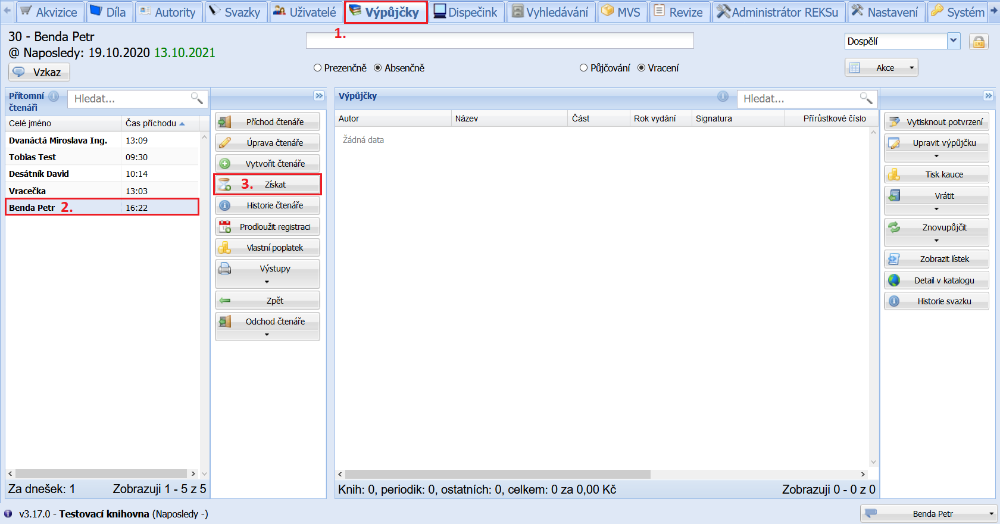
(fig. 1)
The system redirects us to the Search tab, where retrievals are created. In the page header we see the reader whom we had selected in the lending protocol and for whom the retrieval will be created. We search for the document we will be retrieving and select it in the table of works. Then we click the Request button.
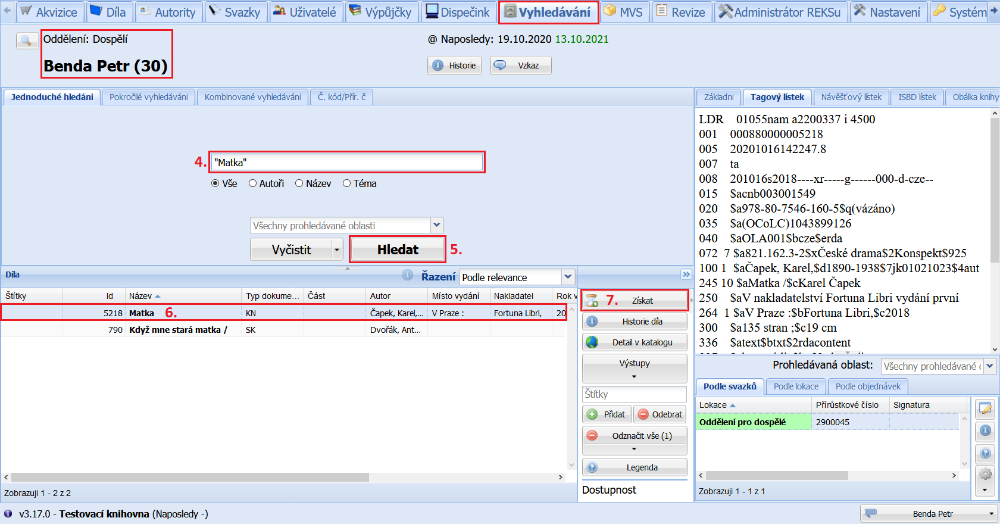
(fig. 2)
We select the department where we want to make the retrieval and create it by pressing the Request button.
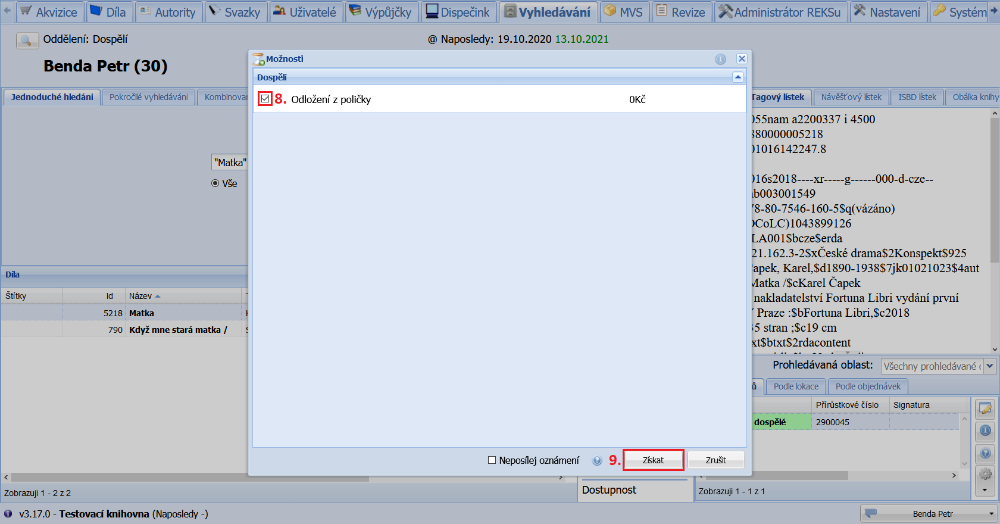
(fig. 3)
In the bottom right corner the information about the result is displayed.
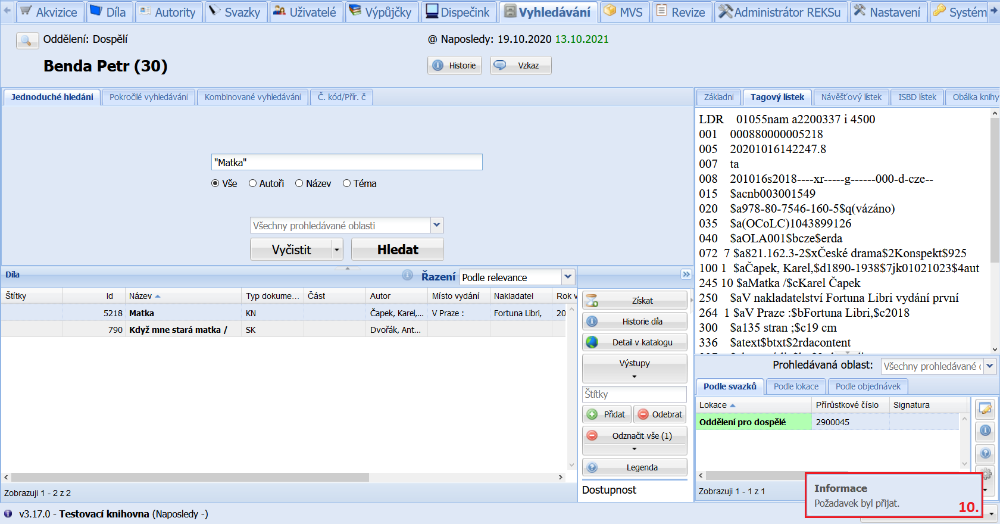
(fig. 4)
We can also create a retrieval for a reader who is not currently present in the library. It is enough to have the department selected in the lending protocol and move to the Search tab. By clicking the magnifying glass we display the overview of readers, where we select the reader for whom we want to create the retrieval, and press the Select button. We then continue as in figure 2.
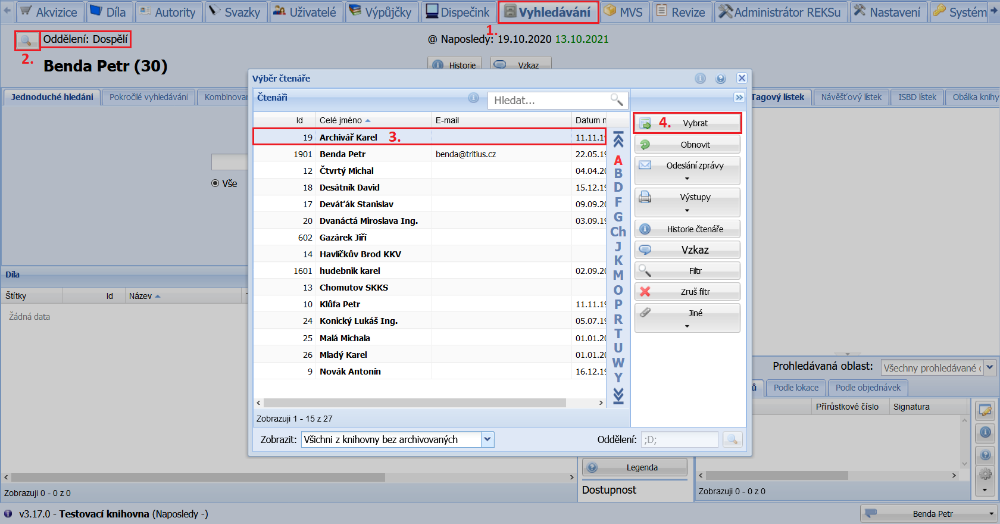
(fig. 5)
Now we move back to the Loans tab. Whenever there is an unprocessed retrieval in the system, created either by us or by the reader themselves online, Actions is highlighted in red. We open the Actions button and select the Retrieval requests option.
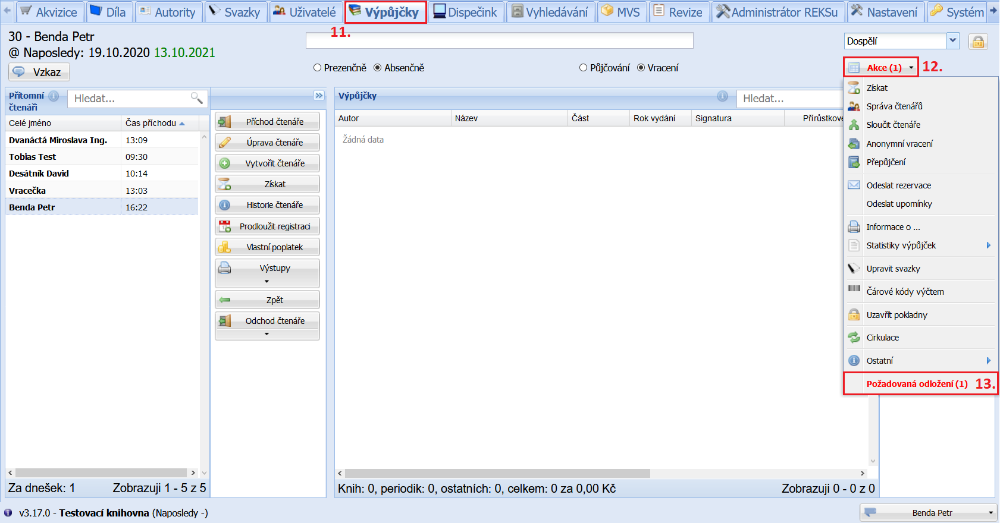
(fig. 6)
A window appears showing all the unprocessed retrievals. In the reports we can print a list of them. We go to find the documents in the library and bring them to the desk. Here, into the input field, we scan the barcode, or type in the incremental number, and confirm the entry with the Enter key. Retrievals are created for an item with a specific incremental number, but it is enough to scan any item of the same work.
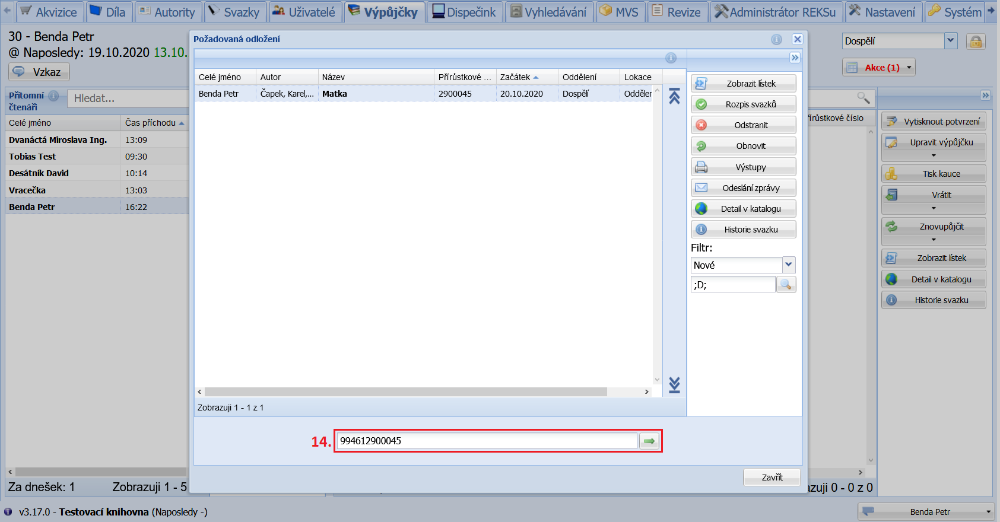
(fig. 7)
After the code is scanned, an information window appears. By clicking Yes we send the reader a notification that a document is waiting for them. We insert the slip that is printed into the document and we are done. In this way we gradually process all the retrievals in the table.
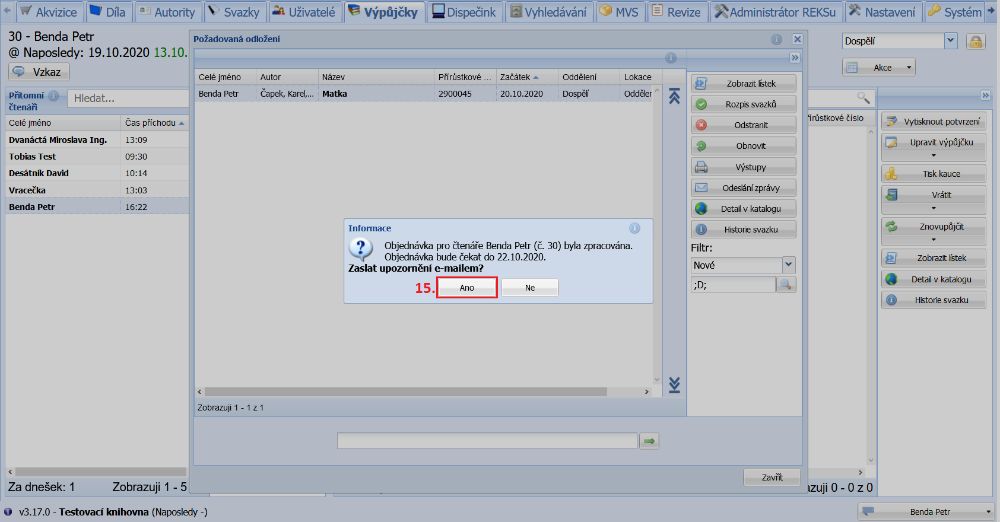
(fig. 8)